New requirements and tariffs: the future of lithium battery imports
New requirements and tariffs are already impacting lithium battery imports. Understand the regulations and get your operations ready for what lies ahead.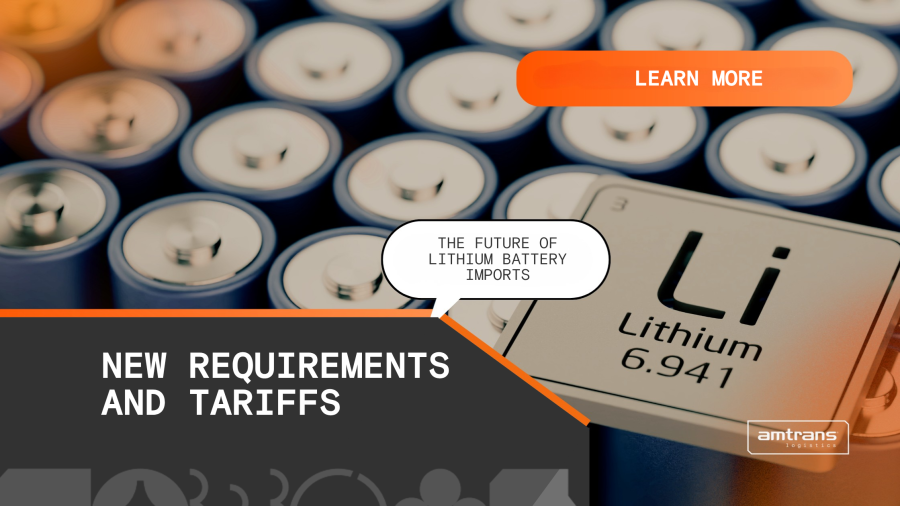
Table of Contents
- Introduction
- New rules and requirements for the maritime import of lithium batteries
- How the new regulations impact the market and lithium battery import operations
- Outlook for lithium battery imports
- FAQ -
The future of lithium battery imports is already here, and it leaves no room for improvisation or misinformation. Is your business ready for this new landscape?
Lithium batteries are classified as hazardous goods, and importing them is considered a high-risk operation. This is because lithium is an alkali metal that can cause:
- explosions,
- fires,
- overheating.
At the same time, they are indispensable for electric vehicles, smartphones, laptops, tablets, and digital cameras. In other words, they are part of everyday life for people around the world. How can businesses balance such high demand against increasingly stringent requirements?
According to Investing News Network, Australia leads the world in lithium production. However, when it comes to battery manufacturing, China dominates the market, playing a strategic role in the global supply chain.
Against this backdrop, understanding the new requirements and tariffs is no longer a competitive advantage — it has become a necessity.
New rules and requirements for the maritime import of lithium batteries
The United Nations (UN) classifies lithium batteries as Class 9 – Miscellaneous Dangerous Substances and Articles. This classification alone reflects the level of care required.
In international shipping, the IMDG Code sets out the global guidelines. For air transport, the rules are governed by the IATA DGR, published by the International Air Transport Association.
And in Brazil? In addition to complying with international standards, certification from the National Institute of Metrology, Quality and Technology (INMETRO) is mandatory to ensure safety standards are met, along with compliance with the requirements of the Brazilian Institute for the Environment and Renewable Natural Resources (IBAMA), which focuses on environmental matters.
Another key development is the updated ABNT NBR 14725:2023 standard, which brought Brazilian guidelines into alignment with international standards with regard to:
- classification,
- labeling,
- product documentation.
As a result, a Safety Data Sheet (SDS) is now mandatory — a technical document comprising 16 sections covering composition, handling, emergency procedures, and physical and chemical hazards.
The question is: is your documentation genuinely ready to withstand more rigorous inspection?
How the new regulations impact the market and lithium battery import operations
With stricter rules in place, it is only natural that operations will feel the effects. Logistics planning is no longer merely strategic, it is now decisive.
Enforcement is more active than ever — not just on the product itself, but on all documentation and compliance procedures. Every detail must comply with both international requirements and Brazilian law.
This means carriers and importers must review their processes, refine their workflows, and strengthen internal controls. Otherwise, the risk of cargo retention at customs increases considerably.
It's worth asking: is your company reacting to these changes, or has it already gotten ahead of them?
Outlook for lithium battery imports
Despite the new requirements, the outlook is promising. The Executive Management Committee of the Chamber of Foreign Trade exempted tariffs on 15 products considered essential for the Brazilian industry, including lithium battery models.
The aim is to strengthen the competitiveness of domestic industry and reduce technology costs, particularly in sectors such as electric mobility and electronic equipment.
This decision opens up significant opportunities for importers who are attuned to the market. But it's worth remembering: opportunities demand preparation.
Now more than ever, partnering with specialist companies and maintaining logistics planning aligned with current regulations can be the difference between growing with confidence and running into operational roadblocks.
Want to dig deeper? We suggest you also access our post on the challenges in the maritime import of lithium batteries and expand your strategic vision on the subject.
The future is already in motion — and those who get ahead of the requirements will come out on top.
Sources:
https://www.iata.org/en/publications/dgr/
https://www.gov.br/inmetro/pt-br
https://www.gov.br/ibama/pt-br
1. Why are lithium batteries classified as dangerous cargo?
Lithium batteries are classified as Class 9 – Miscellaneous Dangerous Substances and Articles by the UN because they pose risks of fire, explosion, and overheating. During sea or air transport, any lapse in handling, packaging, or documentation can lead to accidents, making strict compliance with international standards essential.
2. Which regulations govern the maritime import of lithium batteries?
For maritime transport, the rules are set out in the IMDG Code (International Maritime Dangerous Goods Code).
For air transport, the IATA DGR standards apply.
In Brazil, in addition to international requirements, compliance with the following is mandatory:
- INMETRO certification
- IBAMA environmental requirements
- ABNT NBR 14725:2023 standard
These regulations define criteria for classification, labeling, packaging, and documentation.
3. What is a Safety Data Sheet (SDS) and why is it mandatory?
A Safety Data Sheet (SDS) is a technical document comprising 16 sections covering:
- product composition
- physical and chemical hazards
- emergency procedures
- handling and storage guidelines
With the update of ABNT NBR 14725:2023, the SDS became mandatory for products classified as hazardous, including lithium batteries. Any absence or error in this document can result in the cargo being held.
4. Do the new requirements affect the cost of importing lithium batteries?
Yes. Stricter rules can give rise to:
- increased documentation compliance costs
- additional packaging requirements
- more intensive inspections
- potential cargo holds
On the other hand, recent tariff reductions for specific lithium battery models may offset some of these costs, depending on the operation.
5. What has recently changed in lithium battery import tariffs?
The Executive Management Committee of the Chamber of Foreign Trade (CAMEX) approved tariff exemptions for certain strategic products, including some lithium battery models.
The aim is to strengthen domestic industry and incentivize sectors such as electric mobility and technology. However, the exemptions do not eliminate technical and regulatory requirements.
6. What are the main risks of failing to comply with regulations when importing lithium batteries?
Non-compliance can result in:
- cargo being held at customs
- fines being imposed
- logistics delays
- increased operating costs
- safety hazards
In more serious cases, the cargo may be barred from loading or clearance altogether.
7. How can businesses prepare for the new lithium battery import requirements?
Preparation involves:
- a comprehensive review of documentation
- validation of the updated SDS
- verification of required certifications
- coordination with specialist logistics operators
- advance operational planning
Getting ahead reduces risk and avoids last-minute decisions that drive up costs.
8. Is the outlook for lithium battery imports positive?
Yes, particularly given the growth of electric mobility and the technology sector. Global demand for lithium batteries continues to grow.
However, the market is trending toward increasingly stringent regulatory standards. Companies that adapt quickly to legal and documentation requirements will gain a competitive edge.
 FAK in maritime transport: how to simplify tariffs and increase predictability in exports
  IATA updates for the air transport of lithium batteries